
Table of Contents
Social Media
Get a Custom Quote
The short version
Most people who overpay for a car never realise it. The money goes in small pieces, and it usually starts with something they said. These are the sentences to avoid:
- “I can afford about $150 a week.” Lets the dealer stretch the loan to fit. Can cost you thousands in extra interest.
- “I love this car.” Tells them you won’t walk, so there is no reason to sharpen the price.
- “You’re the only dealer I’m looking at.” Removes all competition from your deal.
- “I need a car by the weekend.” Urgency is the most expensive thing you can bring to a dealership.
- “What will you give me for my trade-in?” Asked too early, it lets them claw back your discount through a low trade-in.
- “I’ll be paying cash.” Said too soon, it can shrink the discount you are offered.
- “Okay, I’ll sign today.” There is no cooling-off period in WA, and cancelling can cost you up to 5% of the price.
- “Sure, add the warranty.” Extended warranties can add around 20% to a used car’s price and often duplicate rights you already have.
The fix: negotiate one number (the drive-away price), get an independent offer on your current car before you go, and always be ready to walk away.
Read on to find out more and make sure you don’t leave any extra at the dealership…
Nobody walks into a car dealership planning to overpay. But plenty of people drive out having done exactly that, and most of them never find out.
It rarely happens in one big moment. It happens in the trade-in that came in $3,000 under what the car was worth. In the loan stretched from five years to seven so the repayment “fits the budget”. In the $2,500 warranty signed for in the finance office because it sounded sensible at the time.
And very often, it starts with something the buyer said.
Car salespeople are not villains. Most are paid on commission, work long weekends and are very good at one thing: reading buyers. Every sentence you say tells them how much room they have to move, how urgent you are, and where the profit in your deal is going to come from. On a new car the margin can be thin, so that profit often comes from your trade-in, your finance, extended warranties, protection packs and accessories rather than the sticker price.
Here are the ten sentences that cost buyers the most, what they cost you, and what to say instead.
1. “I can afford about $150 a week.”
What it costs you: potentially thousands in extra interest.
This is the most expensive sentence in car buying. Once a salesperson knows your weekly or monthly number, they can make almost any car fit it by stretching the loan term, adding a balloon payment or rolling in extras.
Here’s how it plays out. A $35,000 loan at 9% over five years costs about $167 a week. Tell the dealer you can only do $130 a week and they can make the same car fit by stretching the loan to seven years. You get the repayment you asked for, and you pay around $3,700 more in interest. Same car, same price, more money gone.
As one buyer on Quora put it, a $300 monthly budget “could be a $5,000 car or a $12,000 car”. The repayment tells you nothing about the price you are actually paying.
Say instead: “I’m focused on the drive-away price. We can talk about how I pay once we’ve agreed on that.”
2. “I love this car. It’s exactly what I want.”
What it costs you: whatever discount you would have got.
The moment you are emotionally committed, your leverage disappears. The salesperson knows you are unlikely to walk, so there is no reason to sharpen the price. Bringing a partner who is openly excited about one specific car does exactly the same thing. One Quora answer with more than a million views tells the story of a wife hugging her husband on the showroom floor, begging him to buy the car. “Any leverage I had to negotiate was gone.”
Say instead: “It’s one of a few I’m looking at.” If you shop with someone else, agree beforehand that you will discuss it privately in the car park, not in front of the salesperson.
3. “You’re the only dealer I’m looking at.”
What it costs you: the gap between one dealer’s price and the best price in town.
If they know you are not shopping around, they are only negotiating against themselves. In Australia, most brands sell the same model through several dealers in the same city, so the price difference between them can be real money.
Say instead: “I’m getting drive-away quotes from a few dealers this week and I’ll go with the best one.” Then actually do it, ideally by email so the quotes are in writing.
4. “I need a car by the weekend.”
What it costs you: your best negotiating tool, which is time.
A buyer whose car has just died, or who starts a new job on Monday, usually takes the first reasonable offer. The salesperson knows it.
Say instead: Nothing about your timeline. If asked, “I’m not in a rush. I’ll buy when the deal is right.” If you genuinely need a car quickly, a week of cheap hire or lifts from a friend can be worth thousands in negotiating room.
5. “What will you give me for my trade-in?”
What it costs you: often the biggest loss in the whole deal.
Asked early, this lets the dealer move money between the two sides of the deal. A generous-looking discount on the new car can be paid for with a low trade-in figure. A “great trade-in price” can be paid for with a smaller discount. You end up negotiating one confusing bundle instead of two clear numbers, and it is very hard to tell whether you won or lost.
Say instead: “I haven’t decided whether I’ll trade in or sell it separately. Let’s agree the price of your car first.” Once the drive-away price is locked in writing, bring up the trade-in, and have an independent offer on your car already in hand. More on that below.
6. “My car’s in pretty bad shape.”
What it costs you: a lower trade-in offer before anyone has even looked at it.
You should never hide or misrepresent a car’s condition. But volunteering a list of faults before the appraisal just anchors the conversation low. Let the dealer do their own inspection, answer their questions honestly, and know your car’s market value before you walk in so you can recognise a lowball offer when you hear one.
Say instead: “Have a look at it and tell me what you’d offer.” Then compare that figure with the independent offer you already have.
7. “I’ll be paying cash.”
What it costs you: part of your discount.
Cash sounds like it should earn a discount. At a dealership it can do the opposite. Dealers can earn commission when they arrange your finance, so a cash buyer can be less profitable to them, and they may hold firm on price to make up the difference.
Say instead: “I haven’t decided how I’ll pay yet.” Negotiate the price as if you might use their finance. Once the price is agreed in writing, you can pay however you like. Just don’t let the price change when your payment method does.
8. “I don’t really know much about cars.”
What it costs you: control of the conversation.
It invites the salesperson to steer you towards whatever suits them. As another popular Quora answer puts it, telling a salesperson you have never bought a car “paints a target on your back”. You don’t need to be an expert. You just need 30 minutes of homework.
Say instead: Ask specific questions that show you’ve done your research. “What’s the drive-away price on the GX with the safety pack?” lands very differently from “How much is this one?”
9. “Is that a good price?”
What it costs you: the better offer they were prepared to make.
Of course they will say yes. You have just given them a free chance to reassure you instead of improving the number.
Say instead: “That’s more than I was expecting to pay. What’s the best drive-away figure you can do?” Then stop talking. Silence after a number is uncomfortable, and it’s usually the salesperson who fills it.
10. “Okay, I’ll sign today.”
What it costs you: your way out, and up to 5% of the price if you change your mind.
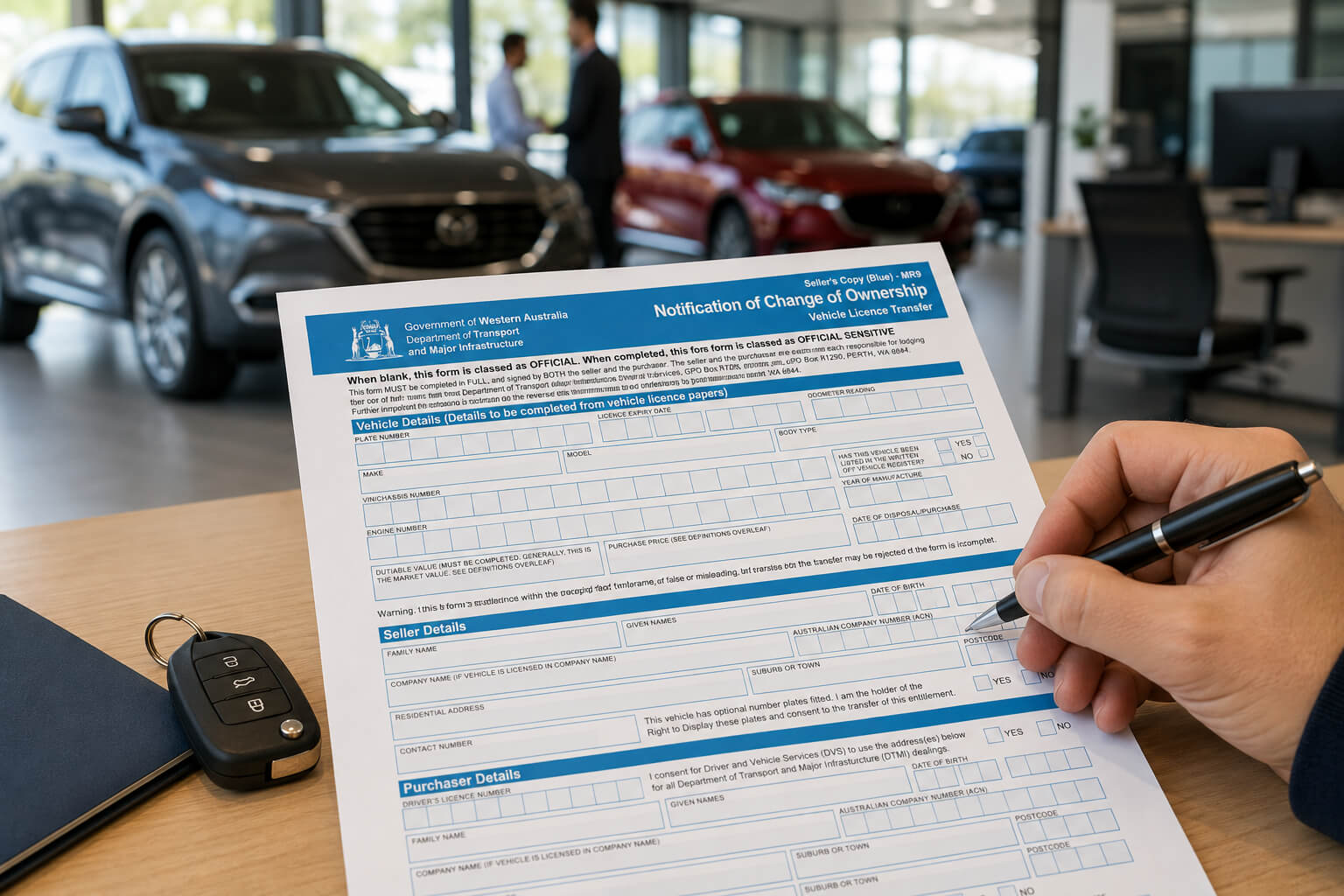
Signing on the spot, especially after being told the offer “is only good for today”, is how most buyers overpay. In Western Australia there is no cooling-off period for vehicle sales. Once you sign, you are committed. If you cancel after signing, a WA dealer can keep up to 5% of the purchase price. On a $40,000 car, that is $2,000 for a change of heart.
Say instead: “Can you put that in writing? I’ll let you know by tomorrow.” A genuine offer will still be there the next day. Several buyers on Quora describe dealers calling them back days later with a better price once they had walked out.
The one you say in the finance office: “Sure, add the warranty.”
After you agree on a price, you are often handed to a business manager to “finalise the paperwork”. This is where the add-ons appear: extended warranties, paint and fabric protection, tinting, loan protection and GAP insurance. It is also where a good deal can quietly become an average one.
The ACCC’s December 2025 report on second-hand car sales found extended warranties can add around 20% to the price of a used car. On a $20,000 car, that is roughly $4,000, often rolled into the loan so you pay interest on it too. The ACCC also found many extended warranties mostly duplicate the consumer guarantees you already get for free under the Australian Consumer Law, and some have claim caps as low as $1,000 for engine repairs.
Say instead: “I’ll take the paperwork home and have a look.” For add-on insurance like GAP cover and loan protection, the law is on your side. Since October 2021, these generally cannot be sold to you until at least four days after you commit to buying the car, so you have time to compare them with alternatives.
How to keep those thousands in your pocket
Avoiding the wrong sentences is half the job. Here is the rest.
Do your homework first
- Shortlist two or three models you’d be happy with, not one.
- Check what the car actually sells for, not the RRP. For new cars, look at manufacturer drive-away offers. For used cars, compare similar listings on Carsales and check a guide such as Redbook.
- Get finance pre-approval from your own bank or lender so you have a rate to compare against.
- Find out what your current car is worth.
Negotiate one number: the drive-away price
The drive-away price includes stamp duty, registration, CTP insurance and the dealer delivery fee. Negotiating anything else lets costs creep back in.
- Stamp duty is set by the state, not the dealer, so it can’t be discounted. In WA, vehicle licence duty is 2.75% for light vehicles up to $25,000, rising on a sliding scale to 6.5% above $50,000. On a new car it is calculated on the manufacturer’s recommended price, so it is a fixed cost to budget for.
- Dealer delivery is set by the dealer and is negotiable. Treat it as part of the overall price rather than a government charge.
- Pre-fitted extras like tinting, paint protection and floor mats are often priced generously. Ask for them to be removed or included at no charge.
Make dealers compete
Send the same enquiry to three or four dealers: exact variant, colour, options and when you want delivery. Ask for an itemised drive-away price in writing, and forward the best quote to the others.
Some brands now use a fixed-price or “agency” model, where the manufacturer sets one national drive-away price. Honda, Mercedes-Benz, Tesla and Polestar are well-known examples. With these brands your savings come from timing, demo stock, your trade-in and your finance rather than haggling.
Time it right
- The last few days of the month or quarter, when a dealer is one or two sales short of a target.
- June, when end of financial year deals peak.
- December and January, when dealers clear the outgoing year’s stock. Make sure the discount reflects the older build date.
- Model runouts, when a new generation is about to arrive.
- Demonstrators, which usually come with a few thousand kilometres, the balance of the new car warranty and a solid discount.
Visit on a weekday if you can. On a busy Saturday the salesperson has other buyers waiting. On a quiet Tuesday afternoon, you have their full attention.
Sort out your trade-in before you go
This is where most buyers lose the most without realising it. A dealer taking your trade is buying a car to resell at a profit, and the trade-in figure is often the easiest place for them to recover the discount they gave you.
Get an independent offer on your car first. With a firm number in writing, you can:
- Lock in the drive-away price on the new car.
- Then ask what the dealer will give you for your trade.
- Take whichever figure is higher, or use your offer to push the dealer up.
In Perth, Sell My Car Pro can give you an instant online valuation and a firm written offer after a free inspection. Even if you end up trading in, you’ll walk in knowing exactly what your car is worth.
Be ready to walk away
Every experienced buyer says the same thing. The willingness to leave is what gets you the best price. There will always be another car, another dealer and another end of month. If the numbers aren’t right, thank them, leave your number and go home. Often the phone rings.
Buying a used car from a dealer in WA? Know your rights
Buying from a licensed dealer gives you protections a private sale doesn’t. In WA:
- Statutory warranty. Used passenger cars sold by a licensed dealer for $4,000 or more come with a statutory warranty. Cars up to 10 years old with no more than 150,000 km get 3 months or 5,000 km, whichever comes first. Cars 10 to 12 years old with 150,000 to 180,000 km get 1 month or 1,500 km. Older or higher-kilometre cars, and commercial vehicles such as single-cab utes, aren’t covered, although Australian Consumer Law protections still apply.
- Consumer guarantees. Under the Australian Consumer Law, a car sold by a dealer must be of acceptable quality, match its description and be fit for purpose. These rights apply automatically and can’t be signed away. An extended warranty is not a substitute for them.
- Clear title. A licensed WA dealer must guarantee there is no money owing on the car. It’s still worth running a PPSR check yourself for a few dollars.
- Check the licence. Every WA dealer must display their licence number, which starts with MD, on their ads and premises. Our guide on how to check if a car dealer is licensed shows you how in two minutes.
- Get an independent inspection. A reputable dealer won’t object to a pre-purchase inspection by a mechanic of your choice.
Frequently asked questions
What should you never say to a car salesperson? Avoid telling them your weekly or monthly budget, that you love the car, that you need it urgently, that they’re the only dealer you’re visiting, or anything about your trade-in or payment method until the drive-away price is agreed in writing.
Should I tell the dealer I’m paying cash? Not until the price is agreed in writing. Dealers can earn commission on finance, so cash buyers are sometimes offered a smaller discount. Once the drive-away price is locked in, how you pay shouldn’t change it.
Is the dealer delivery fee negotiable in Australia? Yes. Stamp duty, registration and CTP are government charges, but dealer delivery is set by the dealer. The easiest approach is to negotiate the total drive-away price rather than individual line items.
Is there a cooling-off period when you buy a car in WA? No. You can withdraw before the contract is signed by both you and the dealer, but after that you’re committed, and cancelling can cost you up to 5% of the purchase price.
When is the best time to buy a car in Australia? The end of the month or quarter, June for end of financial year deals, December and January for outgoing stock, and during model runouts. Weekdays are generally better than Saturdays.
Should I trade in my car or sell it separately? Get an independent offer first, then decide. Trading in is convenient, but only worth it if the dealer’s figure is close to what your car is worth elsewhere. Always negotiate the trade-in after the price of the new car is locked in.
Do I need an extended warranty? Not necessarily. New cars already have a manufacturer warranty, used cars from WA dealers may have a statutory warranty, and every car sold by a dealer carries Australian Consumer Law guarantees. If you’re considering one, check what it covers, the claim limits and the servicing conditions, and compare it with independent options first.
What’s the one thing I should do before visiting a dealership? Find out what your current car is worth. It’s the part of the deal most buyers know least about, and it’s where the easiest money is lost.
Walk in knowing what your car is worth
The best position to be in at a dealership is one where you don’t need them. You know what the car sells for, you have quotes from other dealers, your finance is sorted, and you already have a firm offer on your current car.
Sell My Car Pro is a licensed WA motor vehicle dealer (MD31434) and workshop in Malaga. We inspect your car, make a firm written offer, pay out any finance, handle the paperwork and pay by bank transfer the same day. Use it to sell your car outright, or as your benchmark before you negotiate a trade-in.
Get your free valuation or call us on 1300 313 777.
About the Author

Table of Contents
Social Media
Get a Custom Quote

We Buy Cars Of All Makes And Models In Perth
Japanese, European, Korean, and American. Light commercials, SUVs, utes, weekend classics, and near new stock. Late model or twenty years on the clock, registered or not, a runner or a non-starter. If the car has a VIN, we can quote on it.