Table of Contents
Social Media
Get a Custom Quote
If you are selling a car in Western Australia and you have been told to run a PPSR check, this guide walks you through what the report shows, how to read it, and what to do if a security interest comes up against your vehicle. As a Licensed WA Motor Vehicle Dealer and MTA WA member, our team at Sell My Car Pro runs PPSR searches on every car we buy. The good news is a PPSR report is shorter and simpler than it looks, and once you know what to focus on, the decisions become obvious.
What Is The PPSR And Why It Matters For WA Sellers
The Personal Property Securities Register, commonly called the PPSR, is the national register that records security interests over personal property including motor vehicles, company assets, equipment, inventory, trucks and other secured assets. Managed by the Australian Financial Security Authority, it exists to protect consumers and businesses from buying property still subject to a loan, lease or other claim.
For a WA car seller, the PPSR matters because any prospective buyer will run a PPSR check before paying. If a security interest comes up, that buyer’s bank may refuse to settle, the buyer may pull out, or the lender may eventually repossess the car from the new owner. Our companion guide on selling a car with finance owing covers the finance side of the conversation.
What A PPSR Report Actually Shows You
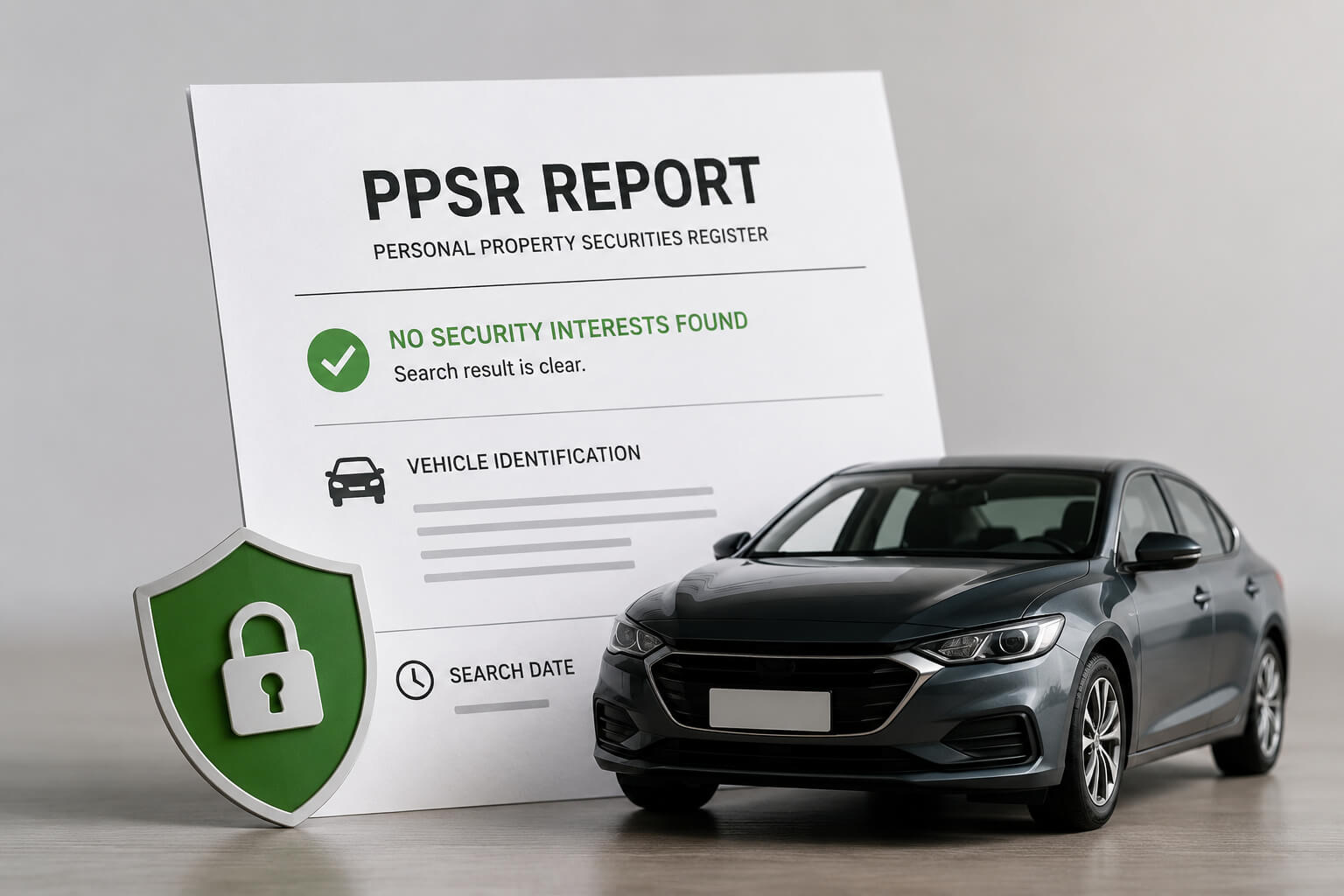
A PPSR report on a motor vehicle is built around three core pieces of information.
Vehicle Identification Details
The top of the report confirms the vehicle by its chassis number (also called the manufacturer’s number or VIN), the unique identifier that ties the search to your specific car. If the chassis number does not match your rego papers or the plate under your bonnet, stop and investigate before going further.
Security Interests Registered Against The Vehicle
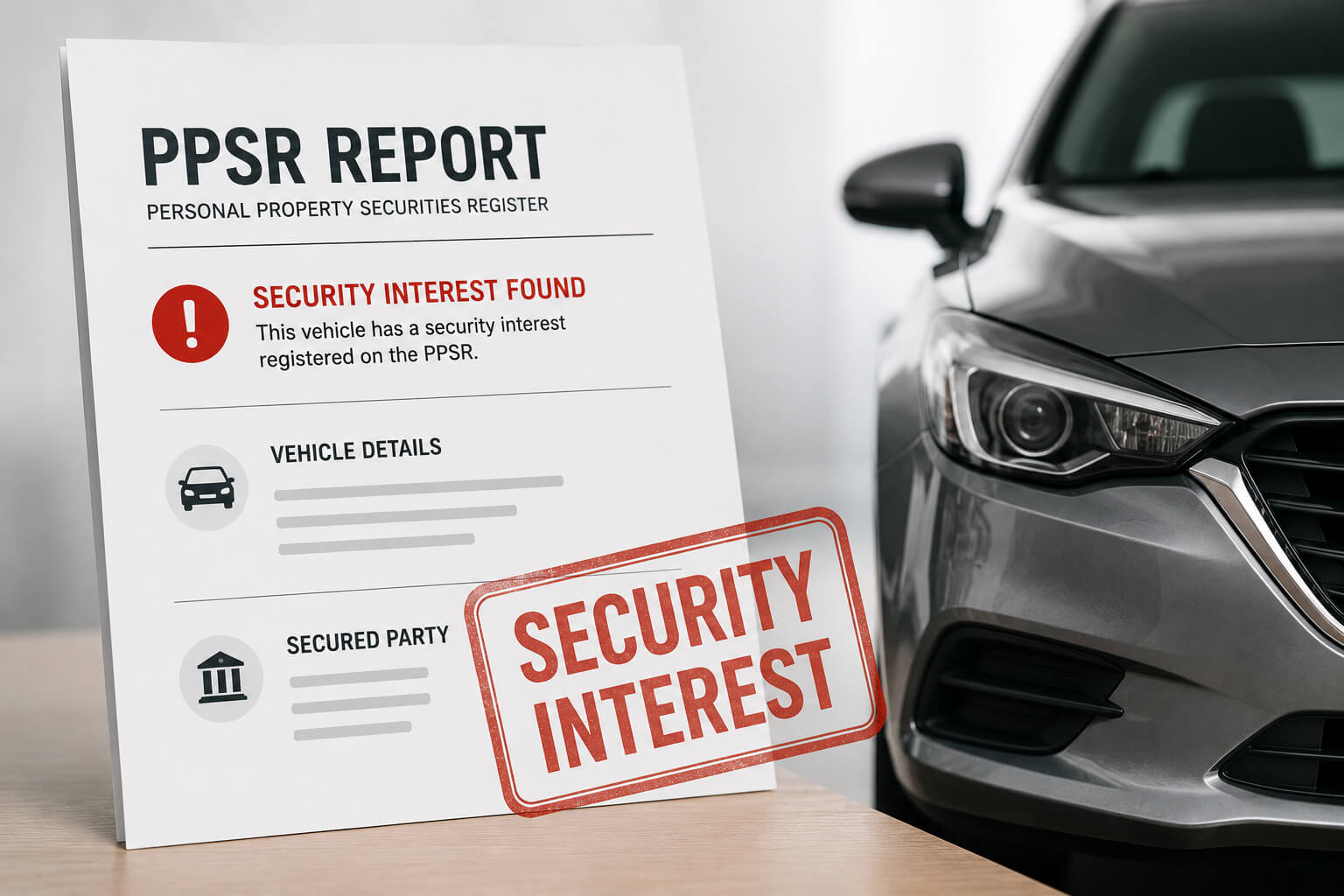
The body of the report lists any security interests registered against the vehicle. Each entry includes the registration date, the secured party (the bank, finance company or business that holds the interest), and the collateral class. For a car under finance, you will typically see an entry from the lender listing the motor vehicle as the collateral. For a car that has been paid off, you should see no security interests, or an entry that has been formally discharged.
Written Off Or Stolen Status
The report also flags whether the vehicle has been recorded as stolen or written off on the national register. A written off status, particularly a statutory write-off, materially affects what you can sell the car for and what paperwork the buyer needs to register it in their name.
How To Read A PPSR Report Line By Line
Read a PPSR report in the same order every time, top to bottom. Start with the search criteria block to confirm the chassis number, date and time of search, and registration queried. Next, the search result summary tells you in plain language whether security interests were found. Then check any detailed entries for secured party name, registration date, end date, and any collateral description mentioning all present and after-acquired property. Finally, check the time stamp at the bottom for the official record.
Common Red Flags On A PPSR Report
Four issues come up regularly on the reports we see. None automatically kill the sale, but each needs a clear plan.
The first is an active security interest from a bank or finance company you thought had been paid off. This typically means a previous owner cleared the loan but the lender did not formally discharge it on the PPSR. Contact the secured party with proof of payment and request a discharge.
The second is a security interest from a previous owner that was never disclosed to you. The original lender may still have priority over the vehicle, which complicates the sale.
The third is a written off status, often because the car was written off, repaired and re-registered without proper disclosure. A statutory write-off cannot be cleaned off the register.
The fourth is a stolen status, which is rare but serious. A car flagged as stolen cannot be sold legally and must be reported to WA Police immediately.
What To Do If Your Car Has A Security Interest
If a security interest comes up against your car and the money owing is still real, the cleanest path is to settle the loan from the sale proceeds at the point of transfer. The lender provides a payout figure, the buyer pays directly to the lender, the remainder comes to you, and the lender discharges the security interest on the PPSR within a few business days. This is the same flow our team runs every week for sellers who come to us with cars still under finance.
If the security interest is a leftover from a paid-off loan, you need a discharge confirmation from the original lender first. Most lenders process discharge requests within 5 to 10 business days. We helped a Scarborough seller last month with a 2018 Toyota Camry showing a discharged-on-paper but still-registered ANZ interest. Two phone calls and a written discharge request later, the PPSR was clean and the sale settled the following week.
For sellers in Riverton, Willetton, Bicton, Attadale and the wider Perth metro who want the PPSR check, the lender coordination and the WA Department of Transport paperwork all handled by one team, our how to sell a car in Western Australia guide walks through the full sequence from valuation through to settlement.
Frequently Asked Questions
How Much Does A PPSR Check Cost?
A standard PPSR search through the official AFSA portal costs a few dollars per search at the time of writing. Many third-party services bundle the PPSR check with additional reports for slightly more. The cost is trivial compared to the protection the check provides for either side of a sale.
Do I Need To Run A PPSR Check On My Own Car Before Selling?
It is not legally required, but one of the smartest things a WA seller can do. Running the check first means you find any security interest before a buyer does, giving you time to clear it and avoid a stalled settlement.
What Is The Difference Between A PPSR Search And A REVS Check?
The PPSR superseded the older state-based REVS check in 2012 and now operates as the national register. Any modern vehicle history search on a second hand car uses PPSR data at its core.
Can I Sell A Car That Has A Security Interest Registered On It?
Yes, but the security interest must be cleared as part of the sale, either by paying off the loan from sale proceeds at settlement or by obtaining a formal discharge before listing. Our piece on the most profitable way to sell your car compares the exit paths for cars under finance.
Conclusion And Next Steps
Decoding a PPSR report comes down to three things: confirming the vehicle by its chassis number, checking for security interests registered against it, and acting on anything that needs clearing before the sale completes. The Australian Financial Security Authority designed the national register to protect consumers, and the same protection helps sellers avoid messy settlements.
If you would rather skip the search, the lender calls, and the paperwork chase entirely, talk to our team at sell my car Perth. As a Licensed WA Motor Vehicle Dealer and MTA WA member, we run the PPSR check, coordinate with secured parties, settle finance payouts with the lender, and handle the WA Department of Transport paperwork as part of the buying process. Get an instant valuation online or call 1300 313 777.
About the Author

Table of Contents
Social Media
Get a Custom Quote


We Buy Cars Of All Makes And Models In Perth
Japanese, European, Korean, and American. Light commercials, SUVs, utes, weekend classics, and near new stock. Late model or twenty years on the clock, registered or not, a runner or a non-starter. If the car has a VIN, we can quote on it.