Table of Contents
- Short Answer: How to Negotiate Trade-In Value
- The Most Important Rule: Separate the Transactions
- Know What Your Car Is Worth Before You Negotiate
- Do Not Compare Your Trade-In With the Dealer’s Retail Price
- Get the Purchase Price Before Discussing the Trade-In
- Ask for a Written, Itemised Offer
- Obtain Several Trade-In Offers
- Use a Genuine Alternative as Leverage
- Ask How the Dealership Calculated Its Offer
- Prepare the Vehicle Before the Appraisal
- Use Service History as Evidence
- Bring Both Keys and Original Accessories
- Understand How Modifications Affect the Offer
- Do Not Focus Only on Monthly Repayments
- Know Your Finance Payout Before You Arrive
- Avoid Unnecessary Accessories and Add-On Products
- Be Cautious With “Today Only” Pressure
- Be Prepared to Walk Away
- Negotiation Phrases You Can Use at the Dealership
- Common Trade-In Negotiation Mistakes
- Does the Time of Month Affect Trade-In Negotiations?
- Government Charges Should Be Checked Separately
- What to Do When the Dealership Will Not Improve Its Offer
- A Step-by-Step Dealership Trade-In Strategy
- Frequently Asked Questions About Negotiating Trade-In Value
- Get an Independent Valuation Before You Sign
- Related Guides
Social Media
Get a Custom Quote
Negotiating trade-in value can be difficult because you are rarely discussing just one number.
The dealership may be adjusting the price of your new car, the amount offered for your current vehicle, optional extras, finance costs and dealer charges at the same time. A generous-looking trade-in offer can quickly lose its shine if the dealership has reduced the discount on the car you are buying.
The best way to negotiate is to arrive with an independent understanding of your car’s value, ask for each part of the deal to be shown separately and remain prepared to sell your current vehicle elsewhere.
This guide covers the full car trade-in process in Perth from the seller’s side: what to establish before you arrive, what to ask for in writing, and what to do when the dealership will not move.
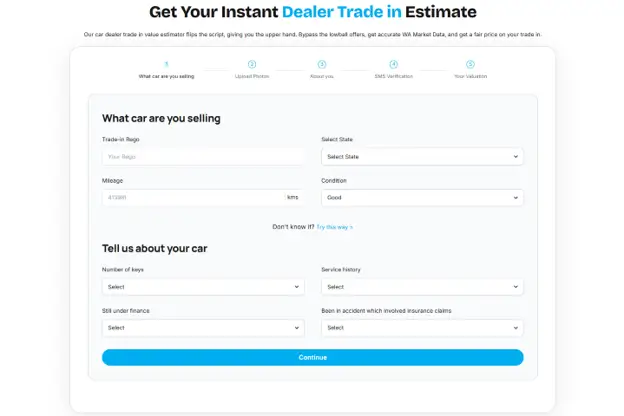
Before visiting the dealership, you can use the Sell My Car Pro instant online valuation to establish a realistic starting point. If the dealership’s trade-in offer is not competitive, our team can arrange an inspection, including meeting you at the dealership where practical, to confirm a valuation and make a direct purchase offer.
That gives you a genuine alternative rather than relying entirely on the dealership’s figures.
Short Answer: How to Negotiate Trade-In Value
- Get an independent valuation before you go, so you have a number that is not the dealer’s.
- Agree the drive-away price of the new car first, in writing, before the trade-in enters the conversation.
- Ask for the purchase price, trade-in, finance payout and changeover as separate line items.
- Present a confirmed written offer from another buyer rather than an opinion about what your car is worth.
- Compare the total changeover and total loan cost, not the trade-in figure or the weekly repayment.
- Be genuinely willing to sell your car elsewhere and complete the purchase without a trade-in.
The Most Important Rule: Separate the Transactions
A dealership trade-in normally involves several separate transactions:
- You are buying another vehicle.
- The dealership is buying your current vehicle.
- You may be purchasing accessories, protection products or warranties.
- You may be arranging finance.
- Your existing finance may need to be paid out.
These transactions are often presented as one combined package. This can make it difficult to tell whether you are receiving a strong trade-in value or simply paying more somewhere else.
Ask the dealership to show you the following figures separately:
- The drive-away price of the vehicle you are buying
- Any discount being applied
- Dealer delivery charges and accessories
- The trade-in value of your current vehicle
- The payout amount for any existing finance
- The deposit required
- The total changeover amount
- The amount being financed
- The interest rate, comparison rate, fees and total loan repayments
The final changeover cost matters, but you should still understand how the dealership reached it.
A dealer could increase your trade-in allowance by $2,000 while removing a $2,000 discount from the vehicle you are purchasing. The changeover amount stays the same, even though the trade-in figure appears to have improved.
Know What Your Car Is Worth Before You Negotiate
It is difficult to challenge a trade-in offer when you do not have a reasonable alternative figure.
Your first step should be establishing three different values:
1. The Advertised Private-Sale Range
This is what owners and dealerships are asking for comparable vehicles online.
Search for cars matching your:
- Make and model
- Year
- Badge and specification
- Engine and transmission
- Kilometres
- General condition
- Location
- Service history
- Factory options
You can compare similar cars through Carsales, Facebook Marketplace and other Australian vehicle listing platforms.
Try to find at least eight comparable vehicles rather than relying on one unusually cheap or expensive example.
2. The Likely Private-Sale Price
An advertised price is not necessarily the amount the owner will receive.
Some listings are priced optimistically. Others have been sitting online for weeks because buyers do not consider them good value. Most private sellers also leave some room for negotiation.
When reviewing comparable vehicles, consider:
- How long the car appears to have been advertised
- Whether the price has recently been reduced
- Whether the vehicle is being sold privately or by a dealer
- Whether the kilometres are genuinely comparable
- Whether the car has full service history
- Whether it is the same trim level
- Whether registration, tyres or servicing will soon be due
- Whether the vehicle has accident history or visible damage
Our guide to finding the market value of your car explains how to work through these comparisons in more detail.
3. The Dealer or Direct-Purchase Value
A dealer will usually pay less than the likely retail or private-sale price.
The dealership needs to allow for inspection, reconditioning, transport, advertising, warranty exposure, holding costs and profit. It may also decide to send the car directly to wholesale rather than retail it.
This does not mean you should accept any trade-in figure offered. It means your target needs to reflect the way the vehicle will be sold.

What a Dealer Is Actually Looking At
Abdul Al Jorany, Dealer Principal at Sell My Car Pro, holds both a WA Motor Vehicle Dealer licence (MD31434) and a Motor Vehicle Repair Business licence (MRB8151), and served his apprenticeship as a mechanic before moving into buying. That combination is unusual, and it changes how a car gets appraised:
“Most buyers tell you what a car might sell for. I can tell you what it’s worth, what’s wrong with it, and what it would take to put it right. When a dealership deducts $4,000 for reconditioning, someone should be able to check whether that number is real. Usually nobody does.”
This matters in Perth specifically. WA has fewer vehicles in the market than the east coast, which tends to support used values here, and east-coast price movements usually reach Perth on a delay. A national valuation guide will not always reflect what a Perth dealership can actually retail your car for this month. Our Perth used car market report tracks those local conditions.
Use the Sell My Car Pro dealer trade-in calculator and instant valuation as an independent reference point. A confirmed written purchase offer is stronger negotiating evidence than a screenshot of a private advertisement.
You can also compare the result with a RedBook car valuation. RedBook provides a useful benchmark, although the result still needs to be adjusted for current local demand, condition and the dealership’s appetite for your particular vehicle.
Do Not Compare Your Trade-In With the Dealer’s Retail Price
One of the most common points of frustration is seeing a similar car advertised by a dealership for considerably more than your trade-in offer.
The difference is not automatically the dealership’s profit.
Before reselling the vehicle, the dealer may need to cover:
- Mechanical inspections
- Servicing and repairs
- Tyres and brakes
- Paintless dent repairs
- Detailing
- Transport
- Advertising
- Registration-related costs
- Warranty obligations
- Sales commissions
- Finance and holding costs
- The risk that the car takes months to sell
However, these costs should not become an excuse for an unreasonably low offer.
Instead of arguing that a similar vehicle is advertised for a higher retail price, use comparable listings to demonstrate demand and then support your position with independent dealer or car-buyer valuations.
Get the Purchase Price Before Discussing the Trade-In
You do not necessarily need to hide the fact that you have a trade-in. You should, however, establish the price of the vehicle you are buying before allowing the trade-in to dominate the discussion.
Ask:
“What is your best drive-away price for this vehicle before we include my trade-in?”
Once you have that figure in writing, ask for a separate appraisal of your current car.
This prevents the dealership from moving money between the two sides of the transaction without making the change clear.
For example:
| Part of the transaction | Dealership A | Dealership B |
| New vehicle drive-away price | $52,000 | $50,500 |
| Trade-in offer | $24,000 | $22,800 |
| Changeover | $28,000 | $27,700 |
Dealership A has offered $1,200 more for the trade-in, but Dealership B still provides the better overall changeover result.
The trade-in number matters, but it cannot be assessed in isolation.
Ask for a Written, Itemised Offer
Verbal figures can change quickly during a dealership negotiation.
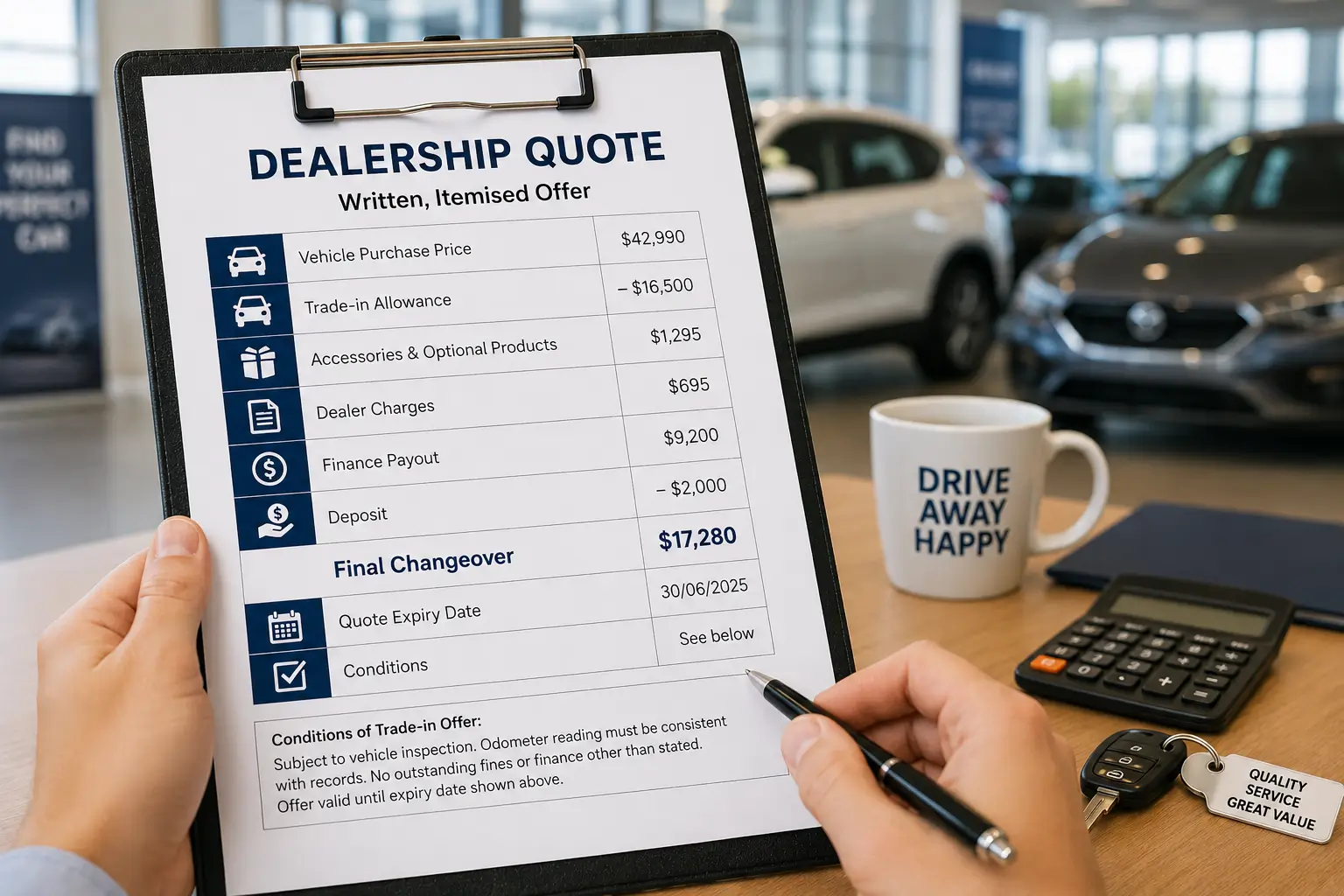
Ask for a written quote showing:
- The vehicle purchase price
- The trade-in allowance
- Accessories and optional products
- Dealer charges
- Finance payout
- Deposit
- Final changeover
- Quote expiry date
- Any conditions attached to the trade-in offer
A written offer allows you to compare dealerships properly. It also prevents confusion about whether a number included registration, accessories, finance or another discount.
Western Australian Consumer Protection recommends shopping around and obtaining more than one valuation when selling a vehicle directly to a dealership.
Obtain Several Trade-In Offers
Different dealerships can value the same vehicle very differently.
A dealership may offer more when:
- It has customers looking for your model
- It has limited stock in that category
- Your car suits its used-vehicle department
- It has a strong retail outlet for the brand
- It can resell the vehicle locally
- It is motivated to complete the replacement-vehicle sale
Another dealership may offer less because it already has several similar vehicles or intends to send the car to wholesale.
Try to obtain offers from:
- The dealership selling your preferred vehicle
- Another dealership selling the same brand
- A large used-car dealership
- A specialist dealership familiar with your vehicle
- A licensed direct car buyer
- Sell My Car Pro
Gather the offers within a relatively short period. Kilometres, market conditions and dealership stock requirements can change, so a valuation from several months ago may no longer carry much weight.
Sell My Car Pro buys every make and model, and our three-step process means an appraisal does not cost you a day of driving between yards.
Use a Genuine Alternative as Leverage
The strongest position in any negotiation is having another acceptable option.
Telling a salesperson that you believe your car is worth more may not achieve much. Showing them a current written offer gives them a specific figure to match or beat.
A useful way to phrase it is:
“I have a confirmed offer of $24,500 for my car. I would prefer to complete everything here, but only if you can match or improve that figure without changing the agreed price of the vehicle I’m buying.”
This keeps the negotiation calm and precise.
It also makes clear that increasing the trade-in while removing another discount will not improve the deal.
Sell My Car Pro can provide an instant estimate online and arrange a physical inspection to confirm the vehicle’s condition. Where practical, our team can meet you at the dealership, provide a firm purchase offer and buy the vehicle separately if the dealership cannot offer a competitive trade-in.
Our case studies show real Perth vehicles, the offers made and what the sellers had been offered elsewhere, and our customer reviews cover how the process runs on the day.

Ask How the Dealership Calculated Its Offer
When the dealership’s trade-in value is lower than expected, ask what deductions have been made.
Questions to ask include:
- What reconditioning does the vehicle require?
- Are there mechanical concerns?
- Has the offer been reduced because of the tyres?
- Is the vehicle going to retail or wholesale?
- Is the service history affecting the offer?
- Does the dealership have too many similar vehicles?
- How much has been allowed for cosmetic repairs?
- Would supplying the second key change the valuation?
- Is the offer conditional on purchasing finance or accessories?
You may not agree with every deduction, but you will learn where the gap is coming from.
If the dealer says the vehicle requires $4,000 in reconditioning, ask for a breakdown. A vague estimate should not automatically be accepted as a precise reduction in value.
Prepare the Vehicle Before the Appraisal
Negotiating technique cannot completely overcome poor presentation.
A clean, organised vehicle is easier to assess and gives the appraiser fewer reasons to assume it has been neglected.
Before the appraisal:
- Wash and vacuum the car
- Remove rubbish and personal belongings
- Clean the boot
- Clean the wheels
- Remove strong odours
- Check that the lights work
- Top up basic fluids where appropriate
- Bring both keys
- Bring the owner’s manual
- Bring the service logbook
- Organise maintenance receipts
- Bring receipts for recent major work
- Make sure the spare wheel and tools are present
- Remove unnecessary items from the cabin and tray
Our article on how to prepare your car for an inspection provides a more detailed checklist.
Our guide on how to maximise your car’s resale value covers the longer-term presentation and maintenance decisions that protect value before you ever reach the dealership.
Be Careful About Paying for Repairs
Some inexpensive repairs can protect your trade-in value. Major repairs may not return what they cost.
Items that may be worth addressing include:
- Blown bulbs
- Worn wiper blades
- Missing wheel caps
- Minor stains
- Small removable dents
- An overdue basic service
- Low-cost replacement trim pieces
- Easily replaced broken accessories
Be cautious about spending heavily on:
- Full resprays
- Major panel repairs
- Engine or transmission work
- Expensive replacement wheels
- Premium tyres immediately before the sale
- Large cosmetic restoration projects
Before approving an expensive repair, obtain an appraisal in the vehicle’s current condition. A dealership or direct buyer may be able to complete the work for less than the retail price you would pay.
This applies most to cars with real mechanical or panel problems. Because Sell My Car Pro operates its own licensed workshop, we buy damaged and mechanically faulty cars without the large ‘unknown risk’ deduction most dealerships apply.
For a broader presentation and maintenance strategy, read our guide on how to maximise your car’s trade-in value.
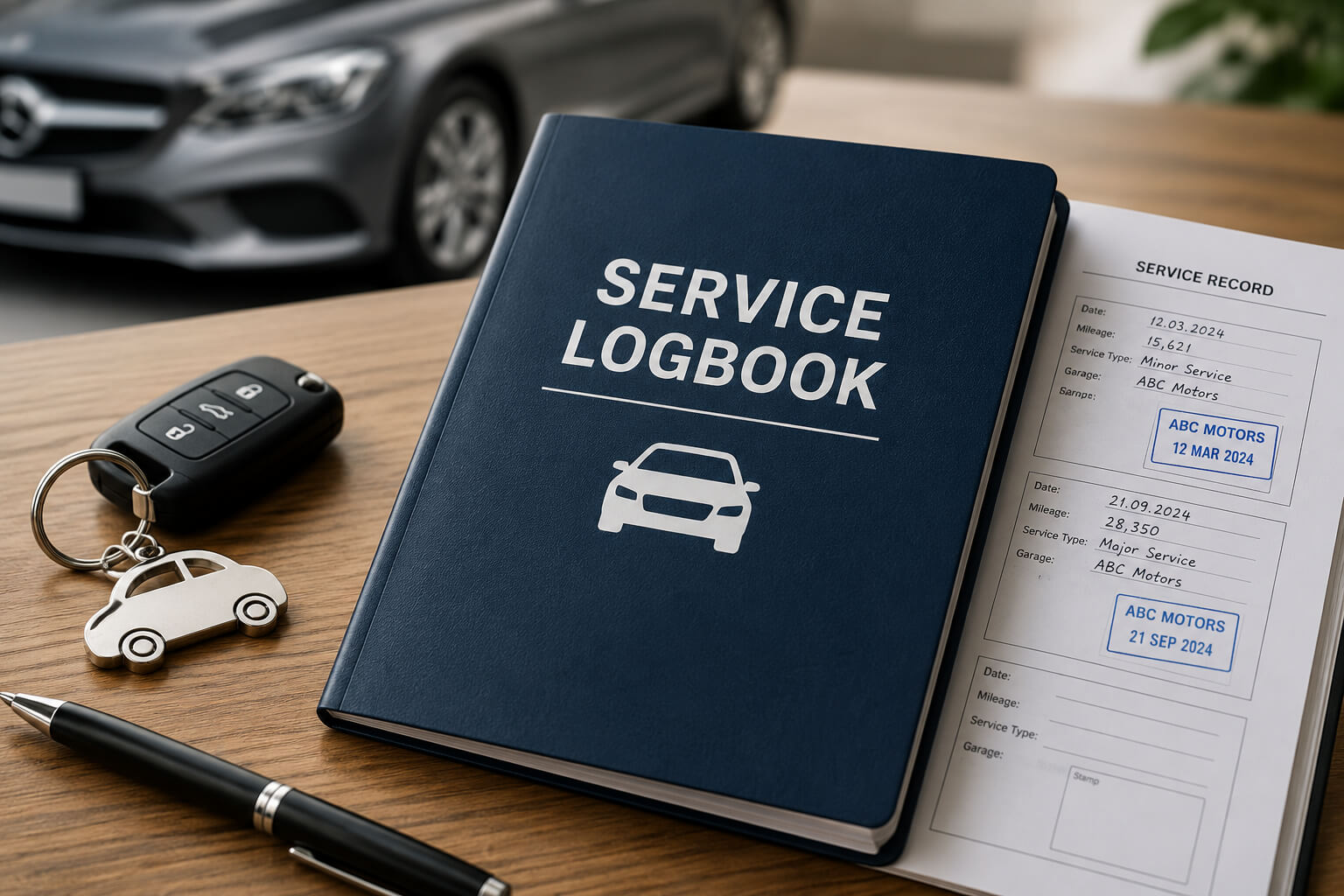
Use Service History as Evidence
A complete service history reduces uncertainty for the next buyer.
Bring:
- The stamped logbook
- Workshop invoices
- Receipts for major servicing
- Timing belt or timing chain records where relevant
- Transmission servicing records
- Evidence of brake or tyre replacement
- Recall completion documents
- Receipts for genuine accessories
Do not simply leave the documents in the glovebox and hope the appraiser notices them. Mention the important work when the vehicle is assessed.
For example:
“The major service was completed three months ago, the transmission was serviced last year and both front tyres were recently replaced. The invoices are in this folder.”
This is more persuasive than saying the car has always been looked after.
Bring Both Keys and Original Accessories
Missing keys can result in a meaningful deduction, particularly for vehicles with expensive smart keys.
Bring:
- Both factory keys
- Remote controls
- Cargo covers
- Parcel shelves
- Headrests
- Towbar tongues
- Locking wheel-nut keys
- Factory floor mats
- Removable rear seats
- Charging cables for electric or plug-in hybrid vehicles
- Any accessories originally supplied with the car
A vehicle presented as complete is easier for the dealer to prepare and resell.
Understand How Modifications Affect the Offer
Owners often expect aftermarket modifications to increase trade-in value by the amount they originally cost. This rarely happens.
Some modifications may appeal to a narrow group of buyers but make the car less attractive to the broader market.
Examples include:
- Suspension lifts
- Aftermarket wheels
- Performance tuning
- Exhaust systems
- Body kits
- Bullbars
- Canopies
- Drawer systems
- Roof platforms
- Upgraded audio systems
High-quality, legal and well-documented accessories may support the value of a ute or four-wheel drive. Poorly installed, heavily personalised or non-compliant modifications may reduce it.
We buy modified and accessorised vehicles regularly, including 4WDs and 4x4s and utes, vans and commercial vehicles, and can value quality aftermarket work properly rather than treating it as a deduction.
Bring receipts and engineering or compliance documentation where relevant.
For removable accessories, compare the value of leaving them on the vehicle with the amount you could receive by selling them separately. Do not remove anything required for the car to remain safe, complete and roadworthy.
Do Not Focus Only on Monthly Repayments
A low monthly repayment does not necessarily mean you are receiving a better deal.
The dealership may reduce the repayment by:
- Extending the loan term
- Increasing the balloon payment
- Increasing the deposit
- Rolling negative equity into the new loan
- Changing the interest rate
- Adding fees
- Packaging insurance or optional products into the finance
Ask for:
- The cash price
- The amount financed
- The loan term
- The interest rate
- The comparison rate
- The balloon or residual payment
- Establishment and monthly fees
- The total amount repayable
The Australian Government’s Moneysmart car loan guide recommends using the comparison rate and checking the total loan cost when comparing finance.
A higher trade-in value can be quickly outweighed by a more expensive loan.
Know Your Finance Payout Before You Arrive
When your current vehicle is under finance, request a payout letter from the lender before negotiating.
The payout letter should show:
- The current settlement amount
- The date the figure expires
- Any early termination fees
- The lender’s payment instructions
- Your loan or account reference
Do not rely only on the balance displayed in an online banking app. The formal payout amount may include fees or interest calculated to a particular date.
The dealership should show the trade-in value and the finance payout as separate figures.
For example:
| Finance calculation | Amount |
| Trade-in value | $25,000 |
| Finance payout | $19,000 |
| Positive equity | $6,000 |
That $6,000 can be applied towards the replacement vehicle.
If the payout is $28,000 and the trade-in value is $25,000, you have $3,000 in negative equity. That shortfall must be paid separately or added to the replacement finance.
Rolling negative equity into another loan may make the changeover appear easy, but you will be borrowing money for a vehicle you no longer own.
If your car has money owing on it, you do not have to solve that at the dealership. Sell My Car Pro buys financed cars and settles the loan directly with your lender, then pays you any positive equity.
Our guide to handling a finance payout when selling a car in WA explains the settlement process.
The official Personal Property Securities Register can show whether a security interest is recorded against a vehicle, although it does not tell you the amount owing. The payout figure must come from the lender.
Our guide to decoding a PPSR report for WA sellers explains what each section of the result actually means.
Avoid Unnecessary Accessories and Add-On Products
Dealership accessories and protection products can make it harder to see whether the overall deal represents good value.
Common additions include:
- Paint protection
- Interior protection
- Window tinting
- Dash cameras
- Extended warranties
- Roadside assistance
- Service plans
- Loan protection products
- Tyre and rim insurance
Some may be useful, but each should be assessed separately.
Ask:
- Is the product optional?
- What is the cash price?
- Is it being added to the finance?
- How much interest will be paid on it?
- Can it be purchased elsewhere?
- Does it duplicate an existing warranty or insurance policy?
Do not allow an accessory package to become compensation for a weak trade-in offer. A heavily marked-up product does not necessarily make the deal better.

Be Cautious With “Today Only” Pressure
A dealer may have a legitimate reason for limiting an offer. Market prices change and a used-car manager may only approve a valuation for a certain period.
However, pressure should not replace proper comparison.
Useful responses include:
“I understand the offer may have an expiry date. Please put the complete figures in writing so I can compare them.”
“I am interested in the vehicle, but I will not sign until I understand the purchase price, trade-in and finance separately.”
“If the offer cannot remain available, I am comfortable continuing my search.”
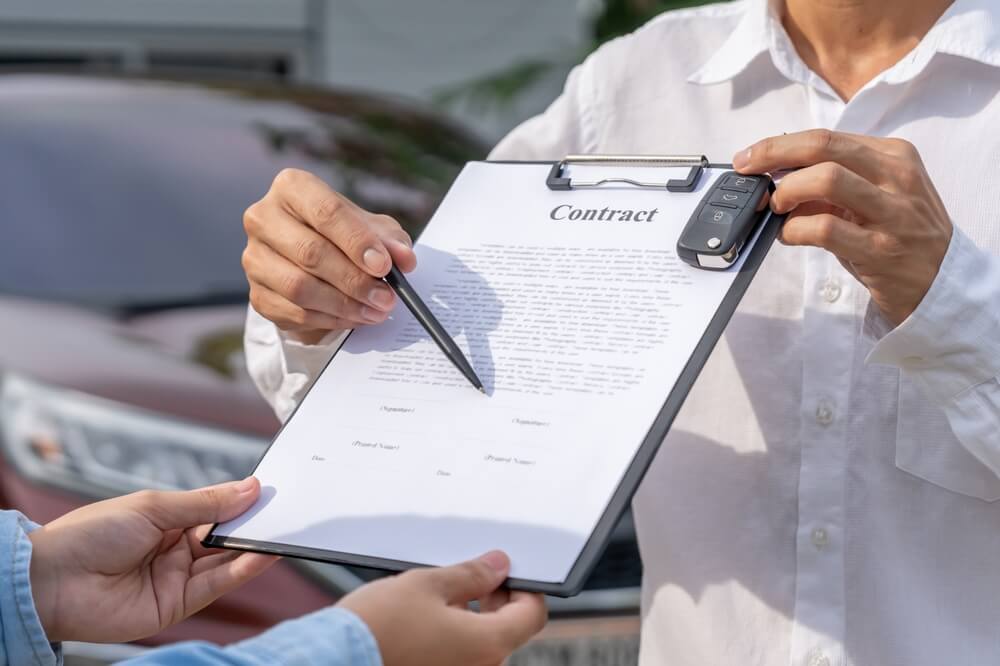
In Western Australia, car purchase contracts become legally binding once signed by the buyer and dealer. WA Consumer Protection states that cooling-off periods do not apply to car purchase contracts in Western Australia.
If you cancel after signing, Consumer Protection WA notes the dealer may charge ‘pre-estimated damages’ – capped in Western Australia at five per cent of the total purchase price of the car, and it must be a genuine estimate of the dealer’s loss, not a penalty. On a $50,000 car that is up to $2,500. There is no cost to walking away before you sign.
Take the time to read the agreement before signing.
Be Prepared to Walk Away
The ability to leave is one of your strongest negotiating tools.
This does not mean threatening the salesperson or creating conflict. It means deciding in advance what outcome you will accept.
Before entering the dealership, write down:
- Your target price for the replacement vehicle
- The minimum trade-in value you will accept
- Your maximum changeover cost
- Your maximum total finance cost
- The optional extras you actually want
- The areas where you are willing to compromise
If the deal does not meet those limits, leave politely.
You can return if the dealership improves the offer. You cannot easily undo a signed contract simply because you reconsidered the figures afterwards.

Negotiation Phrases You Can Use at the Dealership
Establishing the Purchase Price
“What is your best drive-away price before including my trade-in?”
“Please show me the vehicle price without finance, accessories or trade-in.”
Discussing the Trade-In
“What is your best purchase price for my car as a separate transaction?”
“Can you explain the deductions that led to that valuation?”
“Is the car being valued for your retail yard or for wholesale?”
Using Another Offer
“I have a current written offer of $24,500. Can you match or beat it without changing the agreed purchase price?”
“I am happy to complete both transactions here if the trade-in is competitive.”
Clarifying the Changeover
“Please show the purchase price, trade-in, payout and final changeover as separate line items.”
“Has anything else changed since the trade-in allowance increased?”
Discussing Finance
“I want to compare the total amount repayable, not only the weekly repayment.”
“Please show the interest rate, comparison rate, fees and balloon payment.”
Walking Away
“The figures are not competitive enough for me to sign today.”
“I am going to compare this with my other written offers.”
“I appreciate your time, but I am comfortable selling my current car separately.”
Common Trade-In Negotiation Mistakes
Accepting the First Offer
The first offer provides a starting point. Ask whether the dealership can improve it and compare it with at least one independent valuation.
Negotiating Only the Trade-In Figure
A higher trade-in can be offset by a higher vehicle price, fewer discounts or more expensive finance.
Using Unmatched Comparisons
A low-kilometre top-specification model is not a suitable comparison for a higher-kilometre base model. Make sure your evidence is genuinely comparable.
Assuming Advertised Prices Are Sale Prices
Online listings show what sellers are asking. They do not always show what buyers eventually pay.
Spending Too Much Before the Appraisal
Obtain an initial valuation before approving major cosmetic or mechanical work.
Arriving Without Documentation
Missing service records, keys and maintenance receipts create uncertainty and give the appraiser more room to reduce the offer.
Negotiating Through Weekly Payments
Always bring the conversation back to purchase price, trade-in value, amount financed and total amount repayable.
Revealing That You Must Buy Today
Urgency weakens your position. Avoid telling the dealership that your current car has failed, your registration is expiring or you must have the new vehicle immediately unless it is genuinely necessary.
Signing Before Comparing the Full Deal
In WA, you should not assume there will be a cooling-off period after signing a vehicle purchase contract.
Does the Time of Month Affect Trade-In Negotiations?
A dealership may become more motivated to complete a sale near the end of a month, quarter or reporting period. This can sometimes help with the price of the replacement vehicle.
It does not guarantee a higher trade-in value.
The used-car manager will still consider:
- Current inventory
- Demand for your model
- Wholesale values
- Reconditioning requirements
- Kilometres
- Vehicle age
- Market conditions
Timing can help, but an independent written offer usually provides stronger leverage than relying on the calendar alone.
Seasonality has more effect on your car’s value than the dealership’s month-end target does. Our guide to the best time to sell your car in Perth covers when WA demand actually peaks.
Do not rush into a poor deal simply because it is the end of the month or the end of the financial year.
Government Charges Should Be Checked Separately
Do not assume that a higher trade-in allowance automatically creates a vehicle licence duty discount in Western Australia.
Vehicle licence duty is calculated under WA’s dutiable-value rules. Use the official WA vehicle licence duty calculator when estimating the full cost of the replacement vehicle.
Ask the dealership to itemise government charges rather than including them in an unexplained changeover figure.

What to Do When the Dealership Will Not Improve Its Offer
A trade-in is convenient, but it is not your only option.
Sell Directly to Sell My Car Pro
You can sell your car separately and use the proceeds towards the replacement vehicle.
Start with an instant online valuation. After inspecting the vehicle, Sell My Car Pro can provide a confirmed purchase offer. Where practical, we can meet you at the dealership so the sale of your current car does not delay the purchase of your next one.
This gives you the convenience of a trade-in without requiring you to accept the dealership’s price.
Learn more about our Perth car trade-in and direct purchase service.
Sell the Vehicle Privately
A private sale may produce a higher price, particularly for a desirable vehicle in excellent condition.
You will need to manage:
- Advertising
- Photography
- Enquiries
- Inspections
- Test drives
- Negotiation
- Payment security
- Finance settlement
- Ownership transfer
A private sale can be worthwhile when the price difference is large enough to compensate for the additional time and risk.
Before you start, read 5 things to do before selling a car in WA. You will also need to understand whether you need rego papers and how CTP transfers on sale.
Use a Consignment Dealer
Some licensed dealers will sell a vehicle on consignment.
The dealer advertises and displays the car, then deducts an agreed fee or commission after the sale. This may suit prestige, classic or specialist vehicles that are difficult to value through a normal trade-in.
In Western Australia a dealer must hold a ‘Category E’ endorsement on their dealer licence to sell on consignment. Ask to see it. They also cannot charge you for pre-sale repairs without your prior written consent.
Review the agreement carefully, including:
- Commission
- Advertising fees
- Insurance
- Storage
- Minimum sale price
- Payment timing
- Contract length
- What happens if the vehicle does not sell
Sell Through an Auction
Auctions may suit unusual vehicles, commercial stock, damaged cars or sellers prioritising speed.
The final price can be unpredictable and fees may apply. Obtain an estimated reserve and full fee schedule before committing.
Delay the Purchase
Keeping your current vehicle for another month may give you time to:
- Obtain more offers
- Complete a private sale
- Pay down finance
- Gather service records
- Complete worthwhile maintenance
- Wait for a more suitable replacement vehicle
Walking away from a weak deal is often financially better than forcing the transaction to happen immediately.
If you are not certain the timing is right at all, when is the right time to get a new car works through the decision.
Our comparison of the most profitable ways to sell a car can help you choose between trading in, selling privately and using a direct car buyer.
A Step-by-Step Dealership Trade-In Strategy
Before Visiting the Dealership
- Use the Sell My Car Pro instant valuation.
- Research comparable vehicles on Carsales and Facebook Marketplace.
- Check a recognised valuation guide.
- Gather service history, receipts and both keys.
- Clean the vehicle.
- Request a finance payout letter if required.
- Decide your minimum acceptable trade-in value.
- Arrange at least one alternative appraisal.
At the Dealership
- Negotiate the replacement vehicle’s drive-away price.
- Ask for that price in writing.
- Have your current vehicle appraised.
- Ask how the offer was calculated.
- Present your independent valuation or purchase offer.
- Request separate figures for the trade-in and purchase.
- Review accessories and finance independently.
- Calculate the total changeover.
- Ask for the complete offer in writing.
- Leave without signing if the figures are not competitive.
Before Signing
Confirm:
- The exact replacement vehicle
- Build and model year
- Drive-away price
- Trade-in value
- Existing finance payout
- Positive or negative equity
- Deposit
- Accessories
- Government charges
- Finance rate and fees
- Balloon payment
- Total amount repayable
- Delivery date
- Any conditions attached to the agreement
Frequently Asked Questions About Negotiating Trade-In Value
Can You Negotiate a Car’s Trade-In Value?
Yes. A dealership’s first valuation is not always its final offer. You may be able to improve it by presenting comparable market evidence, service history, another written offer or a confirmed valuation from a direct car buyer.
How Much Room Is There to Negotiate on a Trade-In?
There is no standard amount. It depends on the vehicle, its condition, dealership stock levels, wholesale demand and the profit available elsewhere in the transaction. Some initial offers have considerable room while others are already close to the dealership’s limit.
Should I Tell the Dealer I Have a Trade-In?
You can tell the dealer, but ask for the replacement vehicle’s best drive-away price before the trade-in is included. This allows you to assess both sides of the deal separately.
Should I Negotiate the New Car or the Trade-In First?
Establish the new car’s drive-away price first, then negotiate the trade-in as a separate transaction. Finally, compare the complete changeover amount.
Can I Use a Sell My Car Pro Valuation to Negotiate?
Yes. An online estimate gives you an initial benchmark. A confirmed purchase offer following inspection gives you stronger leverage because it represents a genuine alternative to the dealership trade-in.
Will Sell My Car Pro Come to the Dealership?
Where practical and arranged with our team, we can meet you at the dealership to inspect the vehicle, confirm the valuation and purchase it separately. This can allow you to complete the replacement-vehicle purchase without accepting a low dealership trade-in offer.
Is It Better to Trade In or Sell Separately?
Trading in is usually convenient because both vehicles are handled in one transaction. Selling separately may provide a better price. The right option depends on the difference in value, the time available and whether the vehicle has finance owing.
Does Cleaning the Car Increase Its Trade-In Value?
Cleaning does not change the vehicle’s mechanical value, but good presentation makes its condition easier to assess and reduces signs of neglect. It can also prevent avoidable deductions for detailing and interior cleaning.
Should I Repair My Car Before Trading It In?
Minor, inexpensive repairs may help. Obtain a valuation before paying for major mechanical or cosmetic work because the increase in trade-in value may be less than the repair cost.
What Happens if I Owe More Than the Car Is Worth?
The difference is negative equity. You must pay the shortfall or include it in the finance for the replacement vehicle. Ask for the shortfall and total new loan amount to be shown clearly before signing.
Is the Highest Trade-In Offer Always the Best Deal?
No. A dealership may offer more for the trade-in while charging more for the replacement vehicle, reducing discounts or providing more expensive finance. Compare the full changeover and total loan cost.
More answers are on our frequently asked questions page.
Get an Independent Valuation Before You Sign
The easiest way to improve your negotiating position is to know that you can sell the vehicle elsewhere.
Use the Sell My Car Pro instant online valuation before visiting the dealership. It gives you a realistic starting point based on your vehicle details and current market conditions.
If you need a confirmed offer, our team can inspect the vehicle, provide a firm purchase price and arrange the sale directly. Where necessary and practical, we can come to the dealership so you can complete both transactions without accepting an inadequate trade-in offer.
A dealership can only control the negotiation while it remains your only option.
Get your independent valuation first, compare the complete figures and sign only when the deal makes financial sense.
Related Guides
How to find the market value of your car
How to maximise your car’s trade-in value
What is the most profitable way to sell your car?
How to handle a finance payout when selling a car in WA
About the Author

Table of Contents
- Short Answer: How to Negotiate Trade-In Value
- The Most Important Rule: Separate the Transactions
- Know What Your Car Is Worth Before You Negotiate
- Do Not Compare Your Trade-In With the Dealer’s Retail Price
- Get the Purchase Price Before Discussing the Trade-In
- Ask for a Written, Itemised Offer
- Obtain Several Trade-In Offers
- Use a Genuine Alternative as Leverage
- Ask How the Dealership Calculated Its Offer
- Prepare the Vehicle Before the Appraisal
- Use Service History as Evidence
- Bring Both Keys and Original Accessories
- Understand How Modifications Affect the Offer
- Do Not Focus Only on Monthly Repayments
- Know Your Finance Payout Before You Arrive
- Avoid Unnecessary Accessories and Add-On Products
- Be Cautious With “Today Only” Pressure
- Be Prepared to Walk Away
- Negotiation Phrases You Can Use at the Dealership
- Common Trade-In Negotiation Mistakes
- Does the Time of Month Affect Trade-In Negotiations?
- Government Charges Should Be Checked Separately
- What to Do When the Dealership Will Not Improve Its Offer
- A Step-by-Step Dealership Trade-In Strategy
- Frequently Asked Questions About Negotiating Trade-In Value
- Get an Independent Valuation Before You Sign
- Related Guides
Social Media
Get a Custom Quote

We Buy Cars Of All Makes And Models In Perth
Japanese, European, Korean, and American. Light commercials, SUVs, utes, weekend classics, and near new stock. Late model or twenty years on the clock, registered or not, a runner or a non-starter. If the car has a VIN, we can quote on it.